
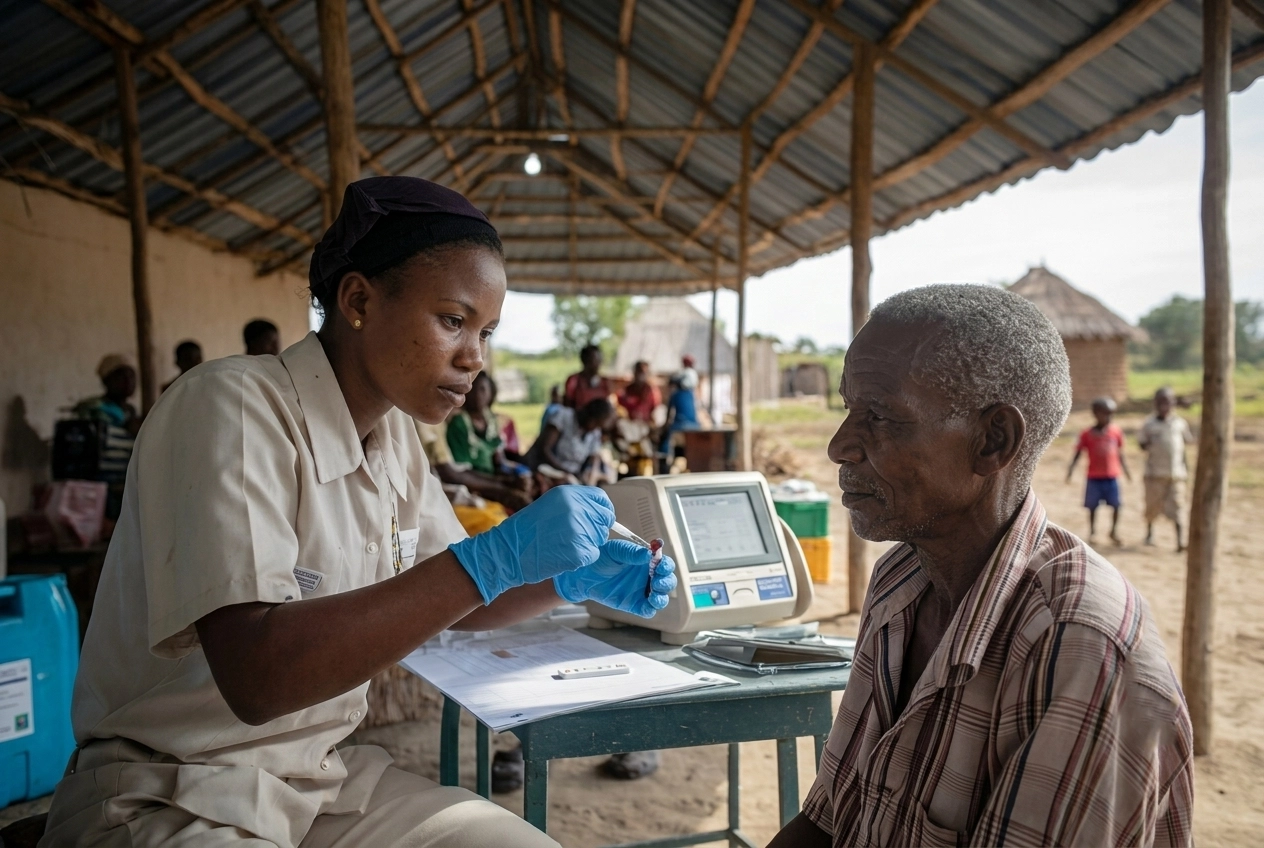
In a malaria-affected village in Myanmar, a mother named Hla rushes her young child to a mobile clinic after several days of fever. The nearest hospital is many hours away on foot. A community health worker takes a small blood sample from the child’s finger and applies it to a rapid diagnostic test. Within just 15 minutes, the cause becomes clear: malaria, not a common viral infection. Treatment begins right away.
On the same day, a pregnant woman in rural Nigeria undergoes a triple rapid screening for HIV, syphilis, and hepatitis B. Less than half an hour later, she receives her results and starts the necessary preventive care to protect her baby. These are not exceptional cases. They reflect the real-world impact of rapid diagnostic tests in communities where access to labs is limited.
One of the biggest strengths of rapid tests is their ability to deliver fast and dependable results. In remote locations, where laboratory services may be several hours or even days away, conventional testing often leads to delays, missed diagnoses, and worse health outcomes. Rapid tests solve many of these problems by requiring no electricity, minimal equipment, and only basic training. A health worker can carry dozens or even hundreds of test kits in a small bag and complete testing during a single village visit.
This speed changes the course of treatment and prevention. Mothers can receive care before childbirth, malaria patients can be treated with the correct medicine instead of unnecessary antibiotics, and outbreaks can be identified before they spread further through a community.
Rapid diagnostics are also moving beyond infectious diseases. Today, they are being used more widely in cardiovascular care, cancer screening, diabetes monitoring, and kidney function assessment. For example, high-sensitivity troponin tests can help rule out a heart attack in less than 20 minutes. Point-of-care tests for HbA1c and creatinine also allow clinicians to monitor chronic conditions in clinics that lack full laboratory infrastructure.
The World Health Organization has prequalified several affordable rapid tests for these uses, and organizations such as UNICEF continue to distribute millions of units each year to low-resource regions. Meanwhile, China has become a major force in the fertility and pregnancy rapid test market, accounting for about 40% of global share and pushing innovation forward through biosensor and AI-based technologies that improve sensitivity and accessibility.
Although there is still progress to be made, the future direction is clear. Every rapid test performed in a remote community represents more than just a medical result—it is a step toward greater equality in healthcare. With rapid diagnostics now helping save lives in infectious disease control, emergency care, cancer, diabetes, and more, supported by international investment and ongoing technological development, a more accessible healthcare system is taking shape. In those few minutes between testing and diagnosis, lives can change.
https://www.rapidlabs.co.uk/news/five-minutes-that-change-a-life-rapid-tests-in-remote-communities/